
Blog
What churches should know before buying livestream equipment online

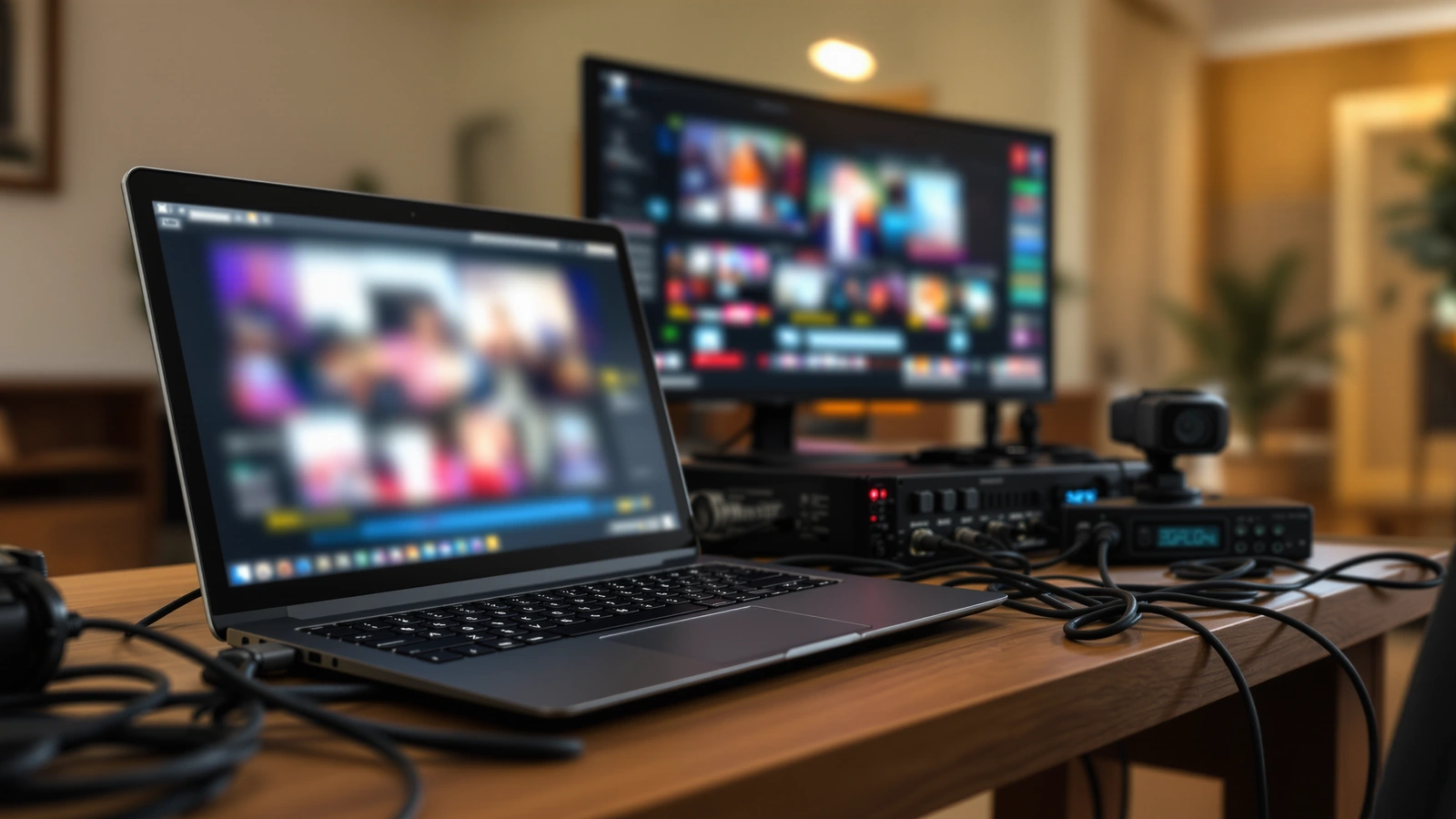
A pastor adds a camera, a switcher, and a microphone to an online cart, sees a total that feels reasonable, and clicks buy. Three weeks later the boxes are stacked in a closet, the camera output does not match the switcher input, and nobody is sure whether the audio cable that came in the bag is the right one. We have helped untangle that exact situation more times than we can count, and almost every time the problem was not the gear itself. It was that the gear was bought as a collection of separate products rather than as a working system.
Buying livestream equipment online is genuinely a good way for a church to get a quality system without a giant installation quote. The catch is that a search box does not know your room, your volunteers, or your internet, and it will happily sell you parts that never quite add up to a stream. Here is what we would want you to understand before you spend the money.
You are buying a chain, not a camera
A church live stream is a chain of dependent parts: a camera or two, a clean audio source, a production tool that switches and streams, an encoder, a platform, internet, cabling, and a person who can run it on a Sunday. Every link has to connect to the next one, electrically and in terms of settings. When you shop product by product, it is easy to buy excellent links that do not join into a chain, which is how a closet full of good equipment ends up producing no broadcast at all.
The first question is not which camera has the best reviews. It is who will run this, from where, with how much training, and what happens when something goes wrong at 9:55 on a Sunday morning. That question shapes every purchase after it, because a system a confident volunteer cannot operate alone is not actually a working system, no matter how good each part looked on its product page.
Compatibility is the trap that catches most online buyers
The most common way an online purchase goes sideways is mismatched connections. A camera might output over SDI while your switcher wants HDMI, or the IP control you assumed was included needs a separate license or a specific network setup. A microphone might be fine but the cable in the box is the wrong type for your board. None of these are defects. They are the small compatibility gaps that a product listing has no reason to warn you about, because the listing is selling one part, not your whole stream.
This is the single biggest argument for buying matched kits rather than loose parts. When the camera, switcher, cabling, and mounting hardware are chosen to work together, the compatibility question is answered before the box ships. Our Move-SE 1-camera PTZ streaming kit with the ATEM Mini Pro is built that way on purpose, so a volunteer is plugging matched pieces into matched inputs rather than discovering an adapter problem the night before a service. If you would rather assemble your own parts, our comparison of the simplest church live streaming setup is a good reality check on how few pieces a clean system actually needs.
Match the system to your room and your people, not the marketing
Specs in an online listing describe a product in a studio, not your sanctuary. Two factors decide whether a camera will actually work for you, and neither shows up clearly in a feature list.
The first is distance. A camera mounted sixty to eighty feet from the platform needs real optical zoom to get a usable closeup, and optical zoom matters far more than the digital zoom that listings love to advertise. A compact camera that looks great on a desk can struggle to reach the stage from the back of a room, especially if it leans on digital zoom to make up the difference. If your room is large, plan for optical reach before anything else.
The second is light. Sanctuaries are usually dimmer than they look, and a camera’s low-light performance often matters more than its headline resolution. It is easy to fixate on a 4K badge because a bigger number reads as better video, but in a typical room the sensor’s behavior in mixed stage lighting will shape the image more than the pixel count will. If you want help sorting through the options for your specific room, our guide to the best camera for live streaming church walks through the trade-offs in plain terms.
Camera count follows volunteer count
It is tempting to buy three cameras because the product page makes a three-camera system look impressive. The number of cameras you should buy follows the number of people you have to run them and the number of angles that genuinely help a viewer follow the service. One clean wide shot beats three angles nobody can switch between well.
Because most churches cannot put an operator at every camera, PTZ cameras with presets carry the load. A single volunteer sets a wide shot, a tighter shot on the speaker, and maybe a worship framing, then recalls them with a button. When your team is ready for a second perspective, the Move-4K 2-camera PTZ streaming kit with the ATEM Mini Pro adds that angle without adding a second person. We made the broader case for this approach in our look at why PTZ cameras suit churches serving both in-person and online congregations.
The 4K question, before you pay for it
Plenty of cameras sold online advertise 4K, and it is worth knowing what that does and does not mean for your stream. Many small-church kits switch and stream in 1080p, and the popular ATEM Mini Pro is a 1080p device, so a 4K camera connected to it is downsampled to 1080p in that workflow. That is not a loss. A high quality 4K sensor downsampled to 1080p can produce a cleaner, more detailed 1080p image than a native 1080p camera, and it leaves you room to crop or reframe in recording.
The point is to buy 4K because it helps your image or your future plans, not because the number is bigger. If most of your viewers watch on phones and your upload speed is modest, a strong 1080p system will serve them beautifully. The Move 4K 1-camera kit with the ATEM Mini Pro gives you that 4K-capable camera in a 1080p streaming workflow, which is a sensible way to buy ahead without overspending today.
Audio is the part the listings underplay
Online camera listings are vivid and audio gear listings are dull, so churches buying online tend to overspend on cameras and underthink the sound. That order is backwards for a stream. Audio carries most of the experience, because a congregation at home will tolerate a softer picture far longer than they will sit through sound they cannot follow.
A few audio realities rarely make it into a product description. A feed pulled dry from the sound board often sounds thin online and may need a touch of room sound to feel natural. A signal sent in too hot will clip and crunch at the switcher, so gain staging matters more than any single piece of gear. And the in-room mix that sounds full to people in the seats can translate poorly to a stream that does not capture the room’s acoustic energy. Before you finalize an online order, read our breakdown of why live stream audio sounds bad so you budget for the audio path instead of bolting it on later.
Check your internet before anything ships
The most overlooked line in any online livestream purchase is the one you cannot buy in the cart: your upload speed. A 1080p stream generally wants a steady upload in the range of five to ten megabits per second so the encoder has headroom, and a wired Ethernet connection straight from the source is far more reliable than wifi for this job. You can confirm the current platform guidance on the YouTube recommended encoder settings page before you commit to a resolution.
This matters because the best camera in the world cannot rescue a stream that the internet keeps dropping. If your upload is limited, that is a reason to plan for 1080p or 720p and a hardwired run, not a reason to buy a more expensive camera. Sort the connection out first, and the gear choices downstream get simpler.
What you are really paying for when you buy a kit
The reason a complete kit can be worth more than the same parts bought loose is that the kit folds in the work you would otherwise do yourself: matching the components, documenting the configuration for your room, and being available when something will not cooperate. Much of a system can be set up remotely after you connect the cables, which keeps the cost well below a full local installation quote while still removing the part most likely to stall a volunteer. You handle the physical work of mounting and cabling, and the configuration gets handled for you.
That support model is the difference between a closet of compatible boxes and a stream that goes live every Sunday. When a setting drifts or an input goes dark, having a person to call turns a crisis into a five-minute fix. We think of support as part of the product rather than an add-on, which is exactly the thing an anonymous online cart cannot put in the box. If you want to understand how the pieces and the price fit together before you choose, our guide to how much a church livestream setup costs in 2026 lays it out honestly, with ranges rather than promises, since prices shift over time.
A sensible way to start
If you take one thing from this before you click buy, let it be this: decide what your viewer should see and hear, count the people who will actually run it, check your upload speed, and then buy a matched system rather than a pile of separate parts. That order protects you from the closet-full-of-gear outcome better than any single product choice.
For most churches getting started, the cleanest first purchase is a one-camera kit that arrives matched, documented, and ready to grow. Our Move-SE 1-camera PTZ streaming kit with the ATEM Mini Pro gives you a remote-controlled camera, a one-button switching and streaming core, and a setup you do not have to reverse-engineer on your own. Have a look, and if you are unsure whether it fits your room or your internet, that is precisely the conversation we are glad to have before you spend a dollar.