
Blog
How much does a church livestream setup cost in 2026

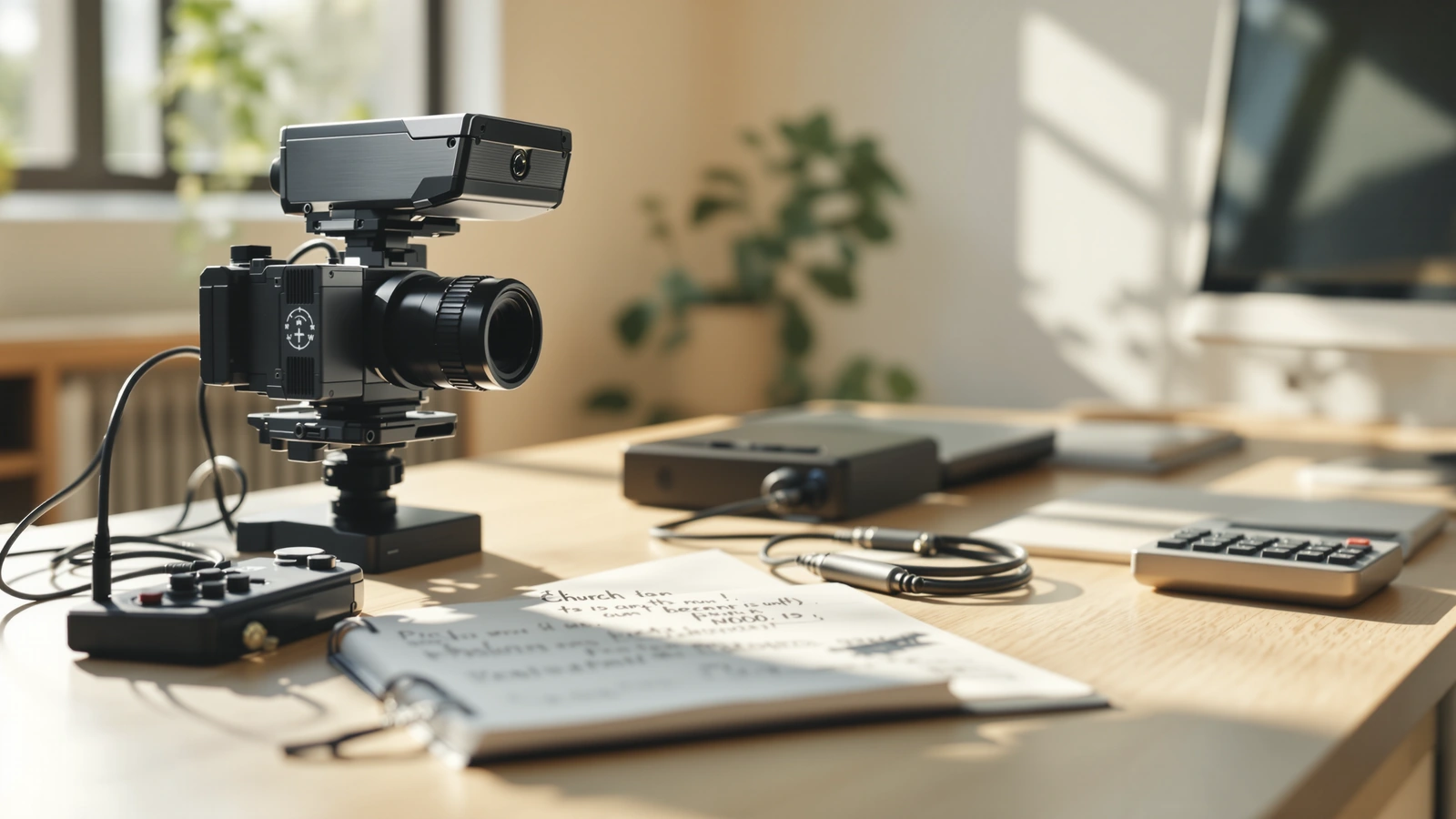
A church livestream setup has a wide cost range because the word setup can mean very different things. A phone on a tripod can cost almost nothing if you already own the phone. A complete PTZ camera system with switching, recording, cabling, monitoring, and support can cost several thousand dollars.
For most churches that want a dependable Sunday workflow, the better planning range is $3,000 to $10,000 for a complete starter system. You can spend less when you build piece by piece. You can spend more when you need multiple cameras, 4K cameras, a larger switcher, longer cable runs, or a cleaner volunteer control workflow.
The goal is to buy the system your volunteers can run well. A livestream that is too complicated for the people serving on Sunday will cost you more than the receipt shows. If you want to see the current product range while you plan, start with our streaming kits and compare the kit level to the job your room needs to do.
What changes the cost
The camera count drives much of the budget. One camera can cover the sermon, announcements, and a simple wide shot. Two cameras give you more movement and a better worship-service feel. Three or four cameras create a stronger production, though they also require more control, more setup time, and more volunteer confidence.
The camera type matters too. A fixed camera can be less expensive, but a PTZ camera lets your team pan, tilt, zoom, and recall preset shots from a controller. That matters when your volunteers need to follow a speaker, move from pulpit to stage, or capture baptism, communion, and worship moments without someone standing behind a camera all morning. If camera location is still unclear, our camera placement guide can help you think through the room before you buy.
The switcher sets the center of the workflow. A small switcher such as an ATEM Mini Pro can handle a simple livestream, recording, and input switching. A larger switcher gives you more room for extra cameras, presentation inputs, and production flexibility. If you are comparing switchers, the switcher difference matters before you decide how many inputs you need.
The quiet costs are the pieces churches often forget: mounts, cables, power, networking, a production monitor, storage, audio adapters, training, and support. Those ordinary pieces decide whether the system works cleanly on Sunday.
A simple cost range for planning
If you are planning a first livestream, use these ranges before you start comparing specific products.
- Under $1,000: A basic phone, webcam, or single fixed-camera approach. This can work for a small room or a temporary start, especially when the audio path is simple.
- $1,000 to $3,000: A more serious DIY setup with a camera, capture device or small switcher, basic cabling, and some audio integration. This range can work when someone on your team already understands video and troubleshooting.
- $3,000 to $6,000: A complete one-camera PTZ workflow or a simpler multi-camera setup, depending on the camera family and switcher. This is where many churches begin if they want a system that feels planned instead of patched together.
- $6,000 to $10,000: A two-camera or three-camera PTZ system with stronger switching, monitoring, control, storage, and support.
- Above $10,000: A larger multi-camera system, premium cameras, 4K workflows, longer cable runs, or a more involved control room.
Those ranges are planning numbers, not a quote. Your room, camera distance, audio source, network, and volunteer team can change the final recommendation. If you are building a system in stages, this older guide on starting from scratch may help you see the order of decisions.
What ChurchSetup kits cost right now
Current ChurchSetup kit pricing gives you a useful benchmark because the kits include more than the camera. They are built around the pieces churches need to make the system work together.
- The Move-SE kit with one PTZ camera and ATEM Mini Pro is currently listed at $3,141.80.
- The two-camera kit with ATEM Mini Pro is currently listed at $5,749.40.
- The three-camera kit with ATEM Mini Pro is currently listed at $7,532.59.
- The four-camera kit with ATEM Mini Extreme is currently listed at $9,889.97.
Those prices reflect published product data checked while preparing this article. Product pricing can change, so the product page should be treated as the final source before you order. For a broader view across brands and kit levels, use the main livestream equipment page.
Why a kit can cost more than a gear list
A gear list can look cheaper because it separates every decision. You choose a camera, then a switcher, then cables, then mounting, then audio, then storage, then a way to monitor the stream. That approach can work if someone in your church has the time and experience to make those choices.
A kit costs more because it narrows the decisions. The camera, switcher, control, cabling, monitoring, and support are selected to work as a system. You still need to install it well and connect your audio properly, but you are starting from a cleaner plan.
That difference matters for volunteer teams. A volunteer should not have to discover during rehearsal that the cable run is too long, the camera cannot be controlled from the booth, or the stream computer cannot see the video source.
Where churches overspend
Some churches spend too much by buying more camera quality than their room, lighting, and team can support. A premium camera cannot fix poor lighting, unclear audio, or a volunteer workflow that no one understands.
A common scenario starts with a budget camera. The church adds adapters, replaces a weak cable run, changes the switcher, then buys the PTZ camera they needed from the beginning. The final system can work, but the path to get there costs more time and patience.
The better move is to name the job the system must do. If the stream only needs to carry the sermon clearly, a one-camera system may serve well. If worship, choir, pulpit, and room shots all matter, you should plan for more camera coverage from the start.
Where churches underspend
Churches underspend when they treat audio as an afterthought. Viewers will forgive a modest camera shot sooner than they will forgive hard-to-hear speech. The livestream budget should account for how audio leaves the sound system and enters the stream.
They also underspend on control. If your team cannot move the camera, recall presets, check the stream, and record the service from a sensible position, the system will feel harder than it needs to feel. Good control does not make the ministry more complicated. It reduces Sunday pressure.
What we would recommend first
If you are starting from scratch, begin with the simplest system your team can run with confidence. For many churches, that means a one-camera PTZ kit with an ATEM Mini Pro, a clean audio path, a monitor for production, and enough training that volunteers know what to do before Sunday morning.
If your room is larger, your service has more movement, or you want worship and sermon coverage to feel less static, plan for two-camera PTZ kit coverage. The second camera gives your team more ways to cover the service without making every shot depend on one angle.
Move beyond two cameras when your volunteers are ready for a fuller production workflow. More cameras can serve the church well, but only when the system remains clear enough for the people who will run it. If that is the direction you are heading, compare the three-camera kit with the larger four-camera kit before you decide.
The next step
If you are trying to budget for a church livestream setup, start with the room and the volunteer team. Where will the cameras go? How far are they from the booth? Where does audio come from? Who will run the system each week?
Once those answers are clear, compare the kit level that matches the job. You can start with a one-camera kit, review all current livestream setups, or ask us to help you choose the setup that fits your room and your team.