
Two-camera vs. three-camera church livestream systems

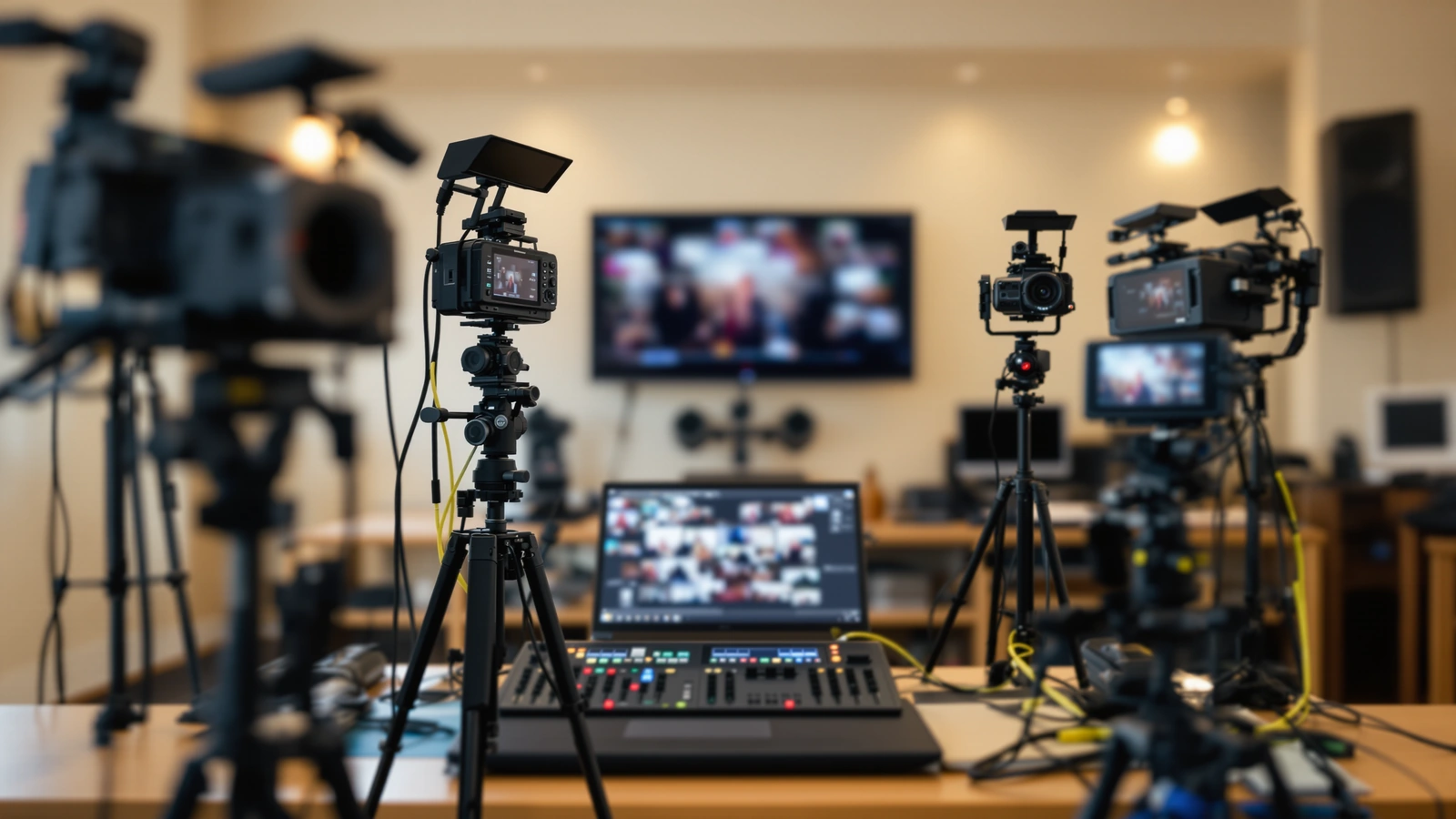
Most churches that are choosing between a two-camera and a three-camera streaming system already have a clear picture of what two cameras give them: a wide shot of the room and a closeup of whoever is speaking, with the operator cutting between the two. The real question is whether a third camera earns its place, or whether it adds a box to manage without changing what the viewer actually sees. That answer depends less on budget than on your room, your service, and how many volunteers you can put behind the controls. We want to walk through the difference honestly, so you land on the count that fits your church rather than the count that sounds more impressive.
Both systems are genuinely good systems. A two-camera setup is the most-watchable jump a church can make from a single static view, and a three-camera setup is the natural next layer when the service has more going on than two angles can cover. The decision is about fit, not about one being better than the other.
What a two-camera system does well
A two-camera system is built around how attention works for someone watching at home. In person, a viewer’s eyes drift from a wide view of the room to the person speaking and back again, and two cameras let you recreate that movement: one establishing wide shot for context and one closer shot for the pulpit, the worship leader, or a vocalist. That alternation alone is the single biggest leap in watchability over a locked-off single camera, because it keeps the stream from trapping the viewer in one frozen perspective.
The other thing a two-camera system does well is stay easy to run. With two angles, the operator is alternating between two known shots, which is a rhythm a new volunteer can find within a service or two. There is less to keep framed, less to monitor, and fewer live decisions per minute. For a church plant, a smaller sanctuary, or a team that runs on one volunteer each week, that simplicity is not a limitation. It is the reason the stream actually happens every Sunday. The Move-SE two-camera kit with the ATEM Mini Pro is the workhorse here, pairing two controllable PTZ angles with a switcher that encodes and records on its own.
What a third camera adds
A third camera changes a two-shot rhythm into real coverage. Instead of cutting back and forth between a wide and a closeup, the operator can hold a wide for context, cut to a tight shot of the speaker, then move to a third angle for the worship team, an instrument, or a different side of the platform. That third angle is what lets a stream breathe during longer moments, because it gives the operator somewhere to go that is neither the same wide nor the same closeup the viewer just saw.
The benefit is most obvious in services with more happening on the platform. A full worship team, a choir, a baptism, a guest speaker who moves, or a room wide enough that a single closeup cannot cover both sides of the stage all give a third camera a clear job. When the service is mostly one person at a pulpit, the third angle has less to do, and a two-camera system covers it cleanly. The distinction is whether your typical Sunday has a third thing worth showing, not whether a third camera is generally nice to have. Our breakdown of how many cameras a church should have and where to place them is a good companion for thinking through that.
The switcher difference is smaller than you would expect
One reassuring part of this decision is that the switcher rarely forces it. The Blackmagic ATEM Mini Pro has four HDMI inputs, so it handles both a two-camera and a three-camera system comfortably, with an input left over for a graphics or lyrics feed. That means stepping from two cameras to three does not require a new switcher or a new control surface, which keeps the learning curve and the cost from spiking at the same time. The ATEM Mini Pro remains a strong floor for either system because it streams and records directly, with no computer in the chain, at around 325 dollars from Blackmagic.
Because the switcher is shared between the two systems, the real cost difference between a two-camera and a three-camera kit is mostly the third camera itself, plus its mount and cabling. That makes the upgrade more affordable than churches often assume, and it is part of why a three-camera kit is a sensible target even for a church that starts with two. If you later need a fourth camera plus room for in-house screens and a multiview, that is when the ATEM Mini Extreme enters the picture, but neither the two-camera nor the three-camera decision requires it. We compare the switchers more fully in our overview of the best video switchers for churches.
What the third camera asks of your team
The honest trade-off with a third camera is the load it puts on the operator. With three angles, the person at the controls is keeping a third shot framed and ready while only ever watching one feed, and they have one more choice to make on every cut. That is very manageable for a team that has found its rhythm, and it can feel like a lot for a volunteer who is still learning the basics. The difference between a three-camera service that looks polished and one that looks frantic is almost always the operator’s comfort, not the cameras.
Presets are what keep that load in check. When each camera has saved framings for the pulpit, the worship leader, and a wide establishing shot, the operator recalls known-good shots instead of aiming live, which turns three cameras into a set of reliable buttons rather than three constant aiming jobs. Auto-tracking, included on the Move-SE and Move 4K, can take it a step further by letting one camera follow a moving presenter on its own. Both tools are how a small team runs a third camera without it running them, and they are part of why our PTZ kits suit churches that do not have a dedicated production crew.
Image quality factors into the choice too
Camera count is one axis, and image quality is another, so it is worth deciding both at once rather than treating them separately. The Move-SE captures clean 1080p60 with a Sony sensor and auto-tracking, and it is the cost-effective choice for most two-camera and three-camera systems. The Move 4K steps up to 4K capture, a newer sensor, and stronger low-light performance, which matters in sanctuaries with dim or uneven stage lighting where a 1080p camera can struggle.
If your room is well lit and your priority is getting solid multi-angle coverage at the friendliest price, the Move-SE in two or three cameras is an easy recommendation. If your lighting is challenging or you want headroom to grow, the Move 4K three-camera kit with the ATEM Mini Pro gives you a cleaner image across all three angles. Keep in mind that the ATEM Mini Pro is a 1080p device, so a 4K camera feeds it a better downsampled 1080p picture rather than producing a 4K stream. The win from 4K here is image cleanliness and future flexibility, not a 4K broadcast.
How to decide between two and three
The cleanest way to choose is to picture a typical Sunday and ask where a third camera would actually cut to. If you can name a recurring moment that two angles cannot cover, a worship team you keep wishing you could show, a side of the platform the wide misses, a baptistry that lives off to one side, then a third camera has a real job and will earn its place. If your honest answer is that two angles already tell the story, a clean two-camera system is the better fit, and you can always add a third later because the switcher already supports it.
Weigh your team alongside your room. A church with a couple of engaged volunteers who like the production work will grow into three cameras quickly, while a church running on one volunteer each week may produce a more faithful stream with two angles run confidently. Neither is a lesser choice; they are matched to different realities, and choosing the one that fits keeps the stream sustainable. Our guide to building a church live stream setup from scratch follows the same principle of fitting the system to the people who run it.
If you want a low-pressure way to see the difference for yourself, look at the two kits side by side. The Move-SE two-camera kit with the ATEM Mini Pro is where most churches start when they want the biggest jump in watchability with the simplest workflow, and the Move-SE three-camera kit with the ATEM Mini Pro is the natural step up when your service has a third thing worth showing. Comparing what each one includes is the easiest way to let your room make the call.